

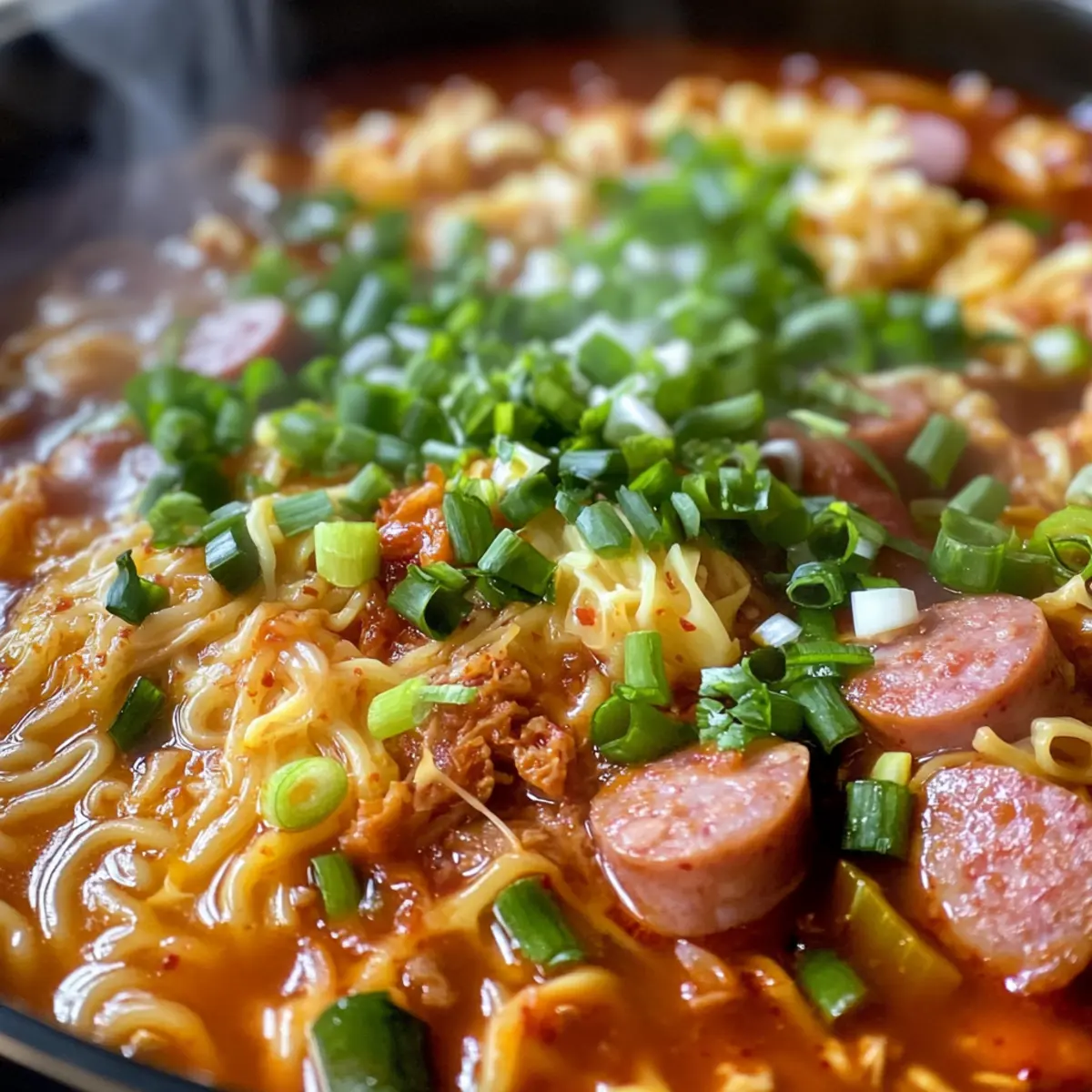
Amid the hustle and bustle of daily life, there’s nothing quite like the comfort of a steaming bowl of Spicy One-Pot Budae Jjigae. This Korean Army Stew brings together the best of both worlds, blending traditional Korean spices with ingredients we all know and love, like spam and ramen noodles. It’s a meal that not only warms the heart but also warms the soul, making it a perfect solution for those cozy nights in. With its quick prep time and ability to be customized based on what’s in your fridge, this one-pot wonder demonstrates the beauty of home-cooked comfort food. Are you ready to dive into this deliciously spicy experience?
Why is Budae Jjigae an Essential Recipe?
Comforting, Heartwarming Flavor: This One-Pot Korean Army Stew is the ultimate cuddle in a bowl, combining the fortifying essence of home-cooked meals with a delightful spicy kick.
Quick Prep Time: Whip this up in under 30 minutes, making it an ideal weeknight dinner solution for busy schedules.
Customizable Ingredients: Adapt the stew to fit your tastebuds; swap proteins or add seasonal veggies for a personal touch.
Crowd-Pleasing Delight: It’s perfect for gatherings, offering unique flavors that will entice both adventurous eaters and those new to Korean cuisine.
Memorable Texture: The mix of chewy ramen noodles, tender spam, and colorful vegetables creates a satisfying mouthfeel that keeps you coming back for more.
Dive deeper into the world of Korean dishes with our other comforting recipes!
One-Pot Korean Army Stew Ingredients
• Explore the vibrant flavors!
For the Base
- Minced Garlic – Provides aromatic depth; use fresh garlic for the best flavor.
- Onion – Adds sweetness and depth; shallots can be used for a milder taste.
For the Spice Paste
- Gochugaru – Adds heat and color; substitute with chili powder if unavailable.
- Gochujang – A fermented chili paste that contributes sweetness and spiciness, can be adjusted to taste.
- Soy Sauce – Enhances umami flavor; low-sodium soy sauce works well too.
- Mirin – Adds sweetness and complexity; consider using rice vinegar mixed with sugar as a substitute.
- Sugar – Balances the spiciness; adjust based on your taste preference.
- Black Pepper – Provides a warm spice; freshly ground is recommended.
For the Hearty Components
- Spam – Offers a savory protein component; can be replaced with chicken or tofu for a lighter version.
- Sausages – Traditional choice for additional heartiness; choose any type of cooked sausage or omit for a vegetarian option.
- Tofu – Adds protein and smooth texture; firm tofu holds up best in stews.
For the Body of the Stew
- Rice Cakes – Contributes chewiness; fresh or dried rice cakes work well, or use noodles as a substitute.
- Enoki Mushrooms – Contribute a delicate texture and mild flavor; shiitake or button mushrooms can also be used.
- Kimchi – Provides tanginess and complexity; sour kimchi is preferable for deeper flavor.
- Ramen Noodles – Quick-cooking noodles that soak up the broth; opt for gluten-free noodles to accommodate dietary restrictions.
For the Creamy Finish
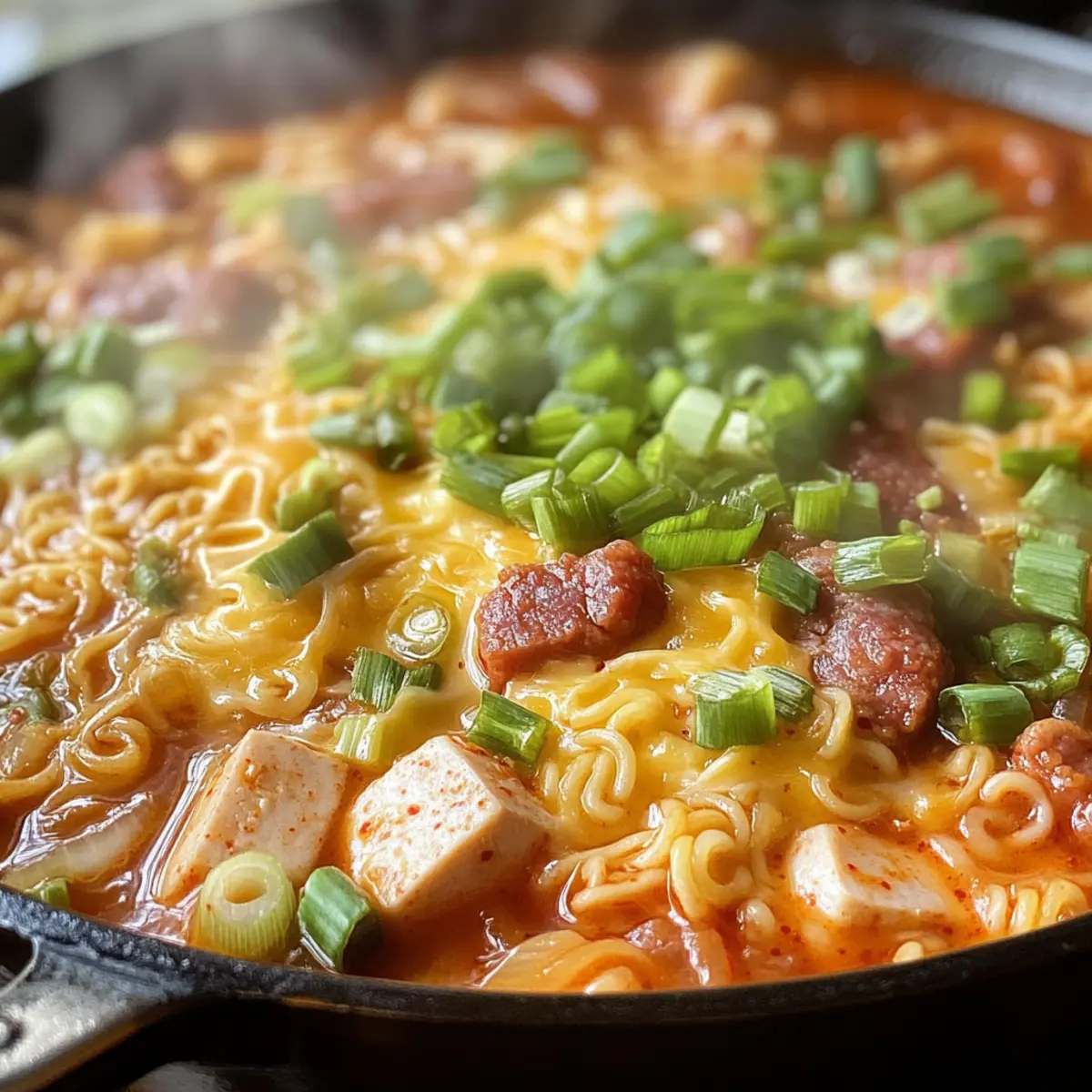
- Cheese – Melts into the stew for creaminess; mozzarella or a cheese blend gives a gooey finish.
- Green Onions – Adds freshness for garnish; can replace with chives if desired.
Dive into this comforting One-Pot Korean Army Stew that’ll surely warm your heart and soul!
Step‑by‑Step Instructions for One-Pot Korean Army Stew
Step 1: Prepare the Spice Paste
In a medium-sized bowl, combine minced garlic, gochugaru, gochujang, soy sauce, mirin, sugar, and black pepper. Mix well until you achieve a smooth paste. This flavorful spice blend will give your One-Pot Korean Army Stew its unique kick. Set the paste aside while you gather the other ingredients.
Step 2: Layer the Ingredients
In a large, shallow pot, start layering your proteins and veggies. Place slices of spam, cooked sausages, and firm tofu at the bottom, followed by rice cakes, onion slices, enoki mushrooms, and a generous scoop of kimchi. Arrange everything well for even cooking, creating a colorful base for the stew.
Step 3: Add the Spice Paste and Broth
Pour your prepared spice paste over the layered ingredients, ensuring it’s evenly distributed. Next, pour enough chicken broth to almost cover everything, about three-quarters full. Cover the pot and bring it to a boil over medium-high heat. You’ll know it’s ready when the broth starts bubbling vigorously.
Step 4: Incorporate the Noodles and Cheese
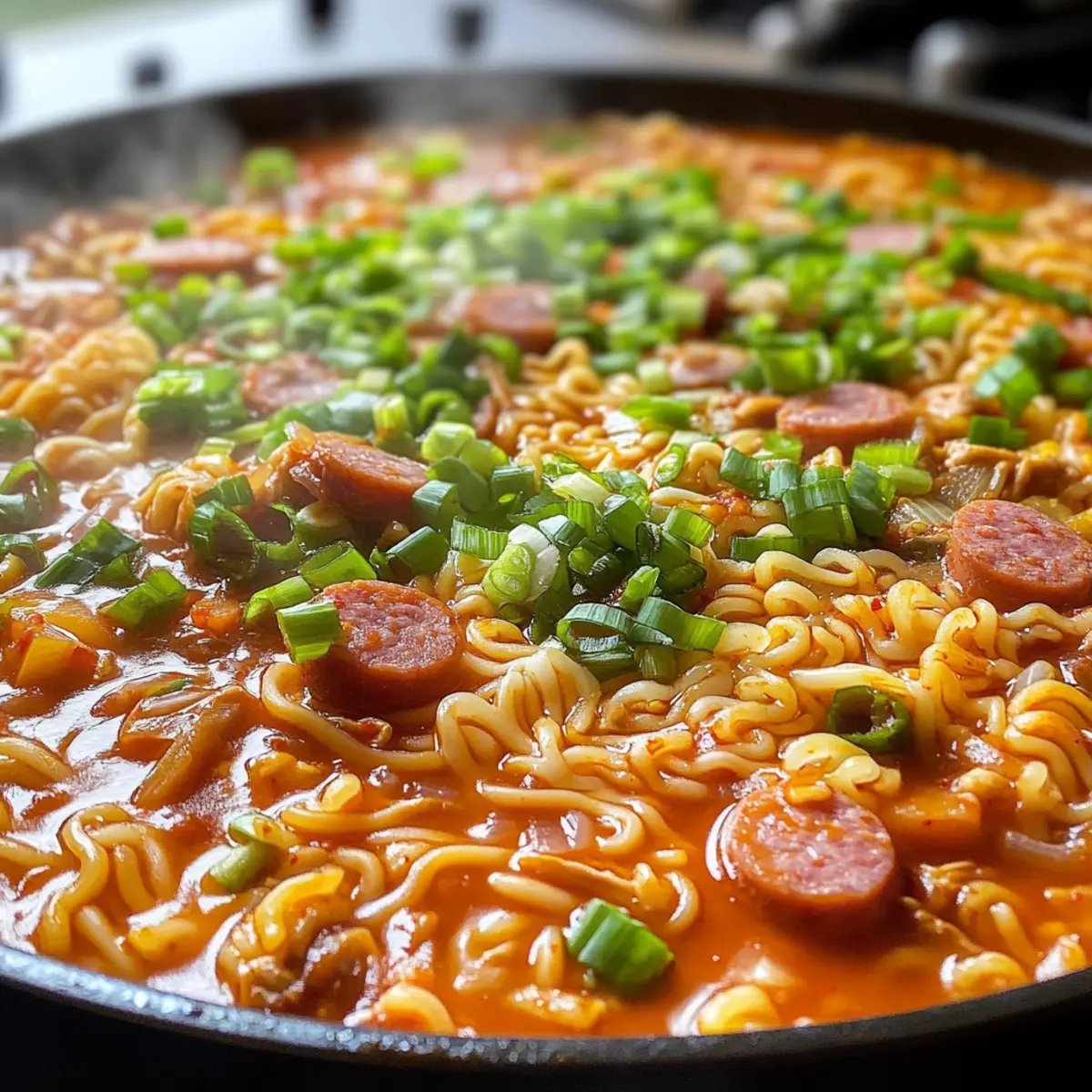
Once boiling, carefully remove the lid and stir in ramen noodles, making sure they sink into the hot broth. Sprinkle shredded cheese on top, which will melt beautifully into the stew. Cover the pot again and allow it to cook for about 5-7 minutes, or until the noodles are tender and the cheese is gooey.
Step 5: Garnish and Serve
After the noodles are cooked to your liking, remove the pot from heat. Garnish the One-Pot Korean Army Stew with freshly chopped green onions for a burst of color and flavor. Serve the stew hot over bowls of steamed rice for a heartwarming, comforting meal that brings everyone together.

One-Pot Korean Army Stew Variations
Feel free to get creative with your Budae Jjigae by swapping ingredients or adding your favorites for a personalized twist!
-
Seafood Delight: Replace spam and sausages with shrimp or scallops for a lighter, ocean-inspired dish. The seafood enhances the flavor profile beautifully.
-
Vegetarian Option: Omit all meat and use vegetable broth for a hearty vegetarian stew. Add chickpeas for extra protein and texture, making it satisfying without the meat.
-
Veggie Boost: Toss in seasonal vegetables like zucchini, bell peppers, or spinach to increase nutrition. These veggies add freshness and vibrant color to the dish.
-
Spicy Kick: For those who crave extra heat, add sliced jalapeños or a sprinkle of crushed red pepper flakes. This will turn your stew into a fiery feast that challenges the taste buds!
-
Creamy Variant: Stir in a dollop of coconut cream or heavy cream before serving for a rich and velvety texture. This twist truly elevates the comfort factor.
-
Noodle Alternatives: Swap out ramen for udon or rice noodles. Adjusting the noodles diversifies the stew and accommodates gluten-free diets wonderfully.
-
Cheese Lovers: Experiment with different cheese varieties, like pepper jack or cheddar, for a unique flavor. Each cheese will impart its character, making the dish even more delicious!
-
Herb Infusion: Add fresh herbs like cilantro or basil to garnish the dish. They enhance flavor and provide a refreshing aroma that lifts the spirits, adding complexity to the stew.
By exploring these delightful variations, you can create the ideal One-Pot Korean Army Stew that matches your taste preferences and mood! If you’re interested in more comforting meals, check out our delicious Spicy Tofu Stir-Fry or our hearty Korean Bibimbap. Let your kitchen adventures begin!
Expert Tips for One-Pot Korean Army Stew
-
Spice Control: Adjust the heat by varying the amounts of gochugaru and gochujang to match your family’s taste. Start with less and add more if desired!
-
Simmer for Flavor: Allow the stew to simmer for a bit longer after it boils, creating deeper flavors, but keep an eye on the noodles to prevent overcooking.
-
Prevent Spills: Use a deep pot to avoid messy spills when the stew bubbles; it will help simmer without issues.
-
Ingredient Substitutions: Feel free to customize your One-Pot Korean Army Stew with whatever proteins or vegetables you have on hand, ensuring a tailored meal.
-
Freshness Matters: Use fresh garlic and green onions for the best flavor; they enhance the dish’s overall aroma and brightness.
Make Ahead Options
These Spicy One-Pot Budae Jjigae are perfect for busy home cooks looking to save time during the week! You can prep the spice paste and layer the proteins and vegetables in the pot up to 24 hours ahead of time. Just assemble everything in your pot the night before, cover, and refrigerate for maximum freshness. When you’re ready to cook, simply pour the chicken broth over the ingredients, bring to a boil, and then add the ramen noodles and cheese. This meal will be just as delicious and comforting, helping you to enjoy a hearty homemade stew with minimal effort on your busy weeknights!
What to Serve with Spicy One-Pot Budae Jjigae
Nothing complements the hearty warmth of this stew quite like delightful side dishes and refreshments that elevate the entire meal experience.
- Steamed White Rice: A fluffy base that soaks up the rich stew, making every bite a comforting delight.
- Korean Pickled Radish: These crunchy, tangy bites cut through the richness of the stew, adding a refreshing contrast to the spice.
- Kimchi Fried Rice: Serve it alongside the stew for an added kick of flavor that balances the savory notes beautifully.
- Salad with Sesame Dressing: A light, crisp salad brings brightness and balance to the spicy stew. The nutty sesame dressing complements every bite wonderfully.
- Korean Corn Cheese: This creamy, cheesy dish offers a sweet note that beautifully offsets the heat of Budae Jjigae, making it a perfect sidekick.
- Cold Soju: Enjoy a glass of this traditional Korean spirit; its clean, smooth flavor cleanses the palate between bites and enhances the flavors of the stew.
- Mango Sticky Rice: For dessert, this sweet Thai treat adds a perfect finish with its cool sweetness and creamy texture, bringing harmony to your meal.
How to Store and Freeze One-Pot Korean Army Stew
Fridge: Store any leftovers in an airtight container; it will stay fresh for up to 3 days. Reheat gently on the stove over low heat, adding a splash of broth if needed to loosen the stew.
Freezer: For longer storage, freeze portions in airtight containers or freezer bags for up to 3 months. Thaw overnight in the fridge before reheating on the stove.
Reheating: When reheating, ensure the stew is heated thoroughly and adjust the thickness by adding broth or water as necessary to maintain the desired texture.
Budae Jjigae Recipe FAQs
What type of ingredients should I look for when making Budae Jjigae?
Absolutely! When selecting your ingredients, freshness is key. Look for vibrant green onions, firm tofu without any dark spots, and enoki mushrooms that are not slimy. For the meats, choose high-quality spam and sausages that appeal to your taste; feel free to taste test a tiny piece! Using fresh garlic will really enhance the aromatic flavor of the stew, while gochugaru should be vibrant red with a rich aroma—this ensures you get the best flavor from your dish.
Advertisement
How should I store leftover Budae Jjigae?
Very simply! Store any leftovers in an airtight container in the refrigerator for up to 3 days. If you’re worried about it drying out, you can add a little extra broth before putting it away. Revive your dish by reheating gently on the stove over low heat, adding a splash of water or broth if needed to loosen the stew back up.
Can I freeze Budae Jjigae, and if so, how?
Absolutely! To freeze Budae Jjigae, portion the stew into airtight containers or freezer bags, ensuring you leave some space for expansion. It will keep well in the freezer for up to 3 months. When you’re ready to enjoy it again, thaw it overnight in the fridge. Reheat it on the stove over low heat, adding broth as necessary to adjust the texture.
What if my stew turns out too spicy?
Don’t worry! If your Budae Jjigae turns out spicier than you’d like, you can mellow the heat in a few ways. Adding a splash of coconut milk or more cheese can help to balance the flavors and add creaminess. Alternatively, serve the stew over steamed rice, as the rice will absorb some of the spice while providing a comforting base that tones down the heat.
Is Budae Jjigae safe for dietary restrictions or allergies?
Definitely! If you’re cooking for someone with dietary restrictions, like gluten sensitivity, swap the ramen noodles for gluten-free noodles. For vegetarians, simply omit the meat and use vegetable broth instead. Always check labels, especially for sauces—like soy sauce—since some brands contain gluten. If any ingredients don’t work for your dietary needs, feel free to customize it to your liking!
What should I do if I can’t find specific ingredients?
Totally understandable! If you’re missing an ingredient like gochugaru or gochujang, you can substitute gochugaru with chili powder, though it might lack some complexity. For the kimchi, feel free to use any fermented vegetable if you’re in a pinch. This recipe is all about making it your own, so adjust based on what’s available to you!
Savor One-Pot Korean Army Stew for Heartwarming Comfort
Ingredients
Equipment
Method
- Prepare the Spice Paste: In a medium-sized bowl, combine minced garlic, gochugaru, gochujang, soy sauce, mirin, sugar, and black pepper. Mix well until smooth.
- Layer the Ingredients: In a large pot, layer spam, cooked sausages, and firm tofu at the bottom, followed by rice cakes, onion slices, enoki mushrooms, and kimchi.
- Add the Spice Paste and Broth: Pour the spice paste over the layer and add chicken broth to cover. Bring to a boil over medium-high heat.
- Incorporate the Noodles and Cheese: Once boiling, stir in ramen noodles and sprinkle cheese on top. Cover and cook for 5-7 minutes.
- Garnish and Serve: Remove from heat, garnish with green onions, and serve hot over bowls of steamed rice.