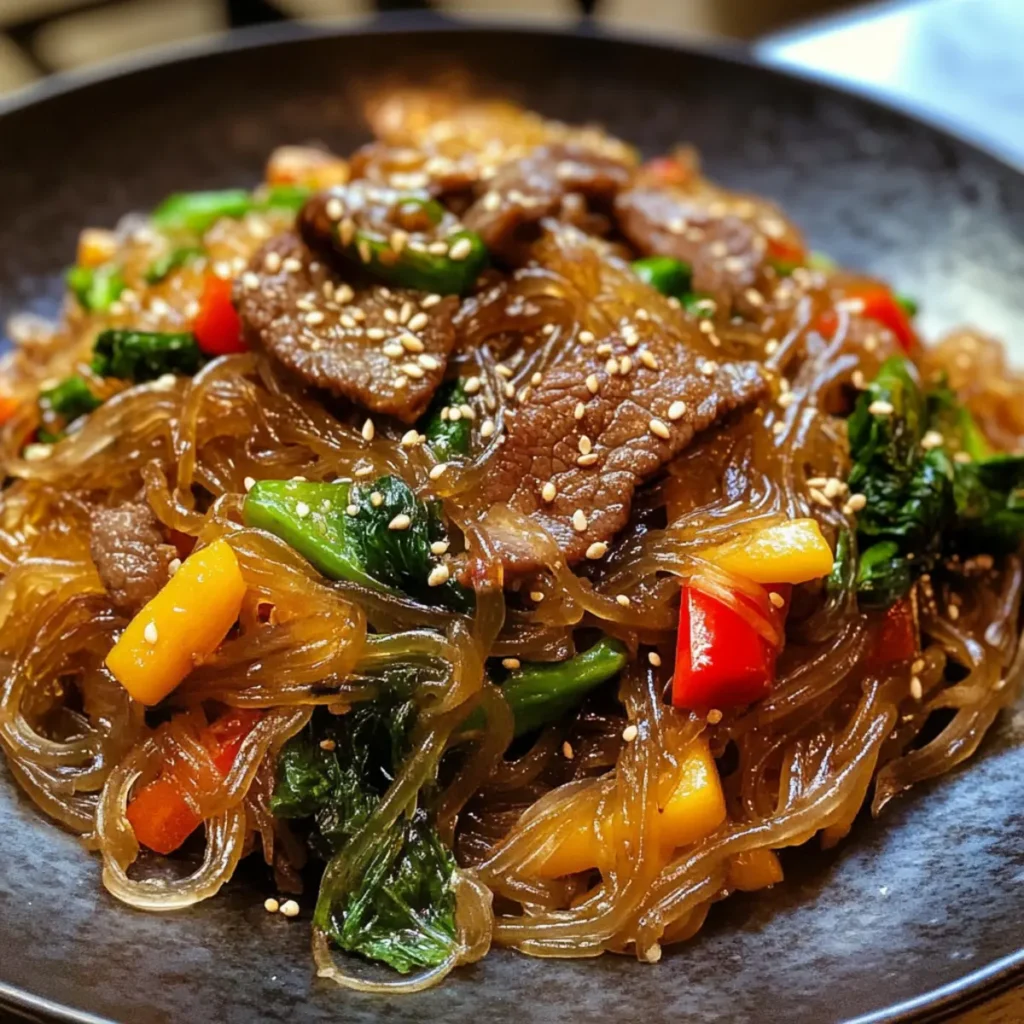
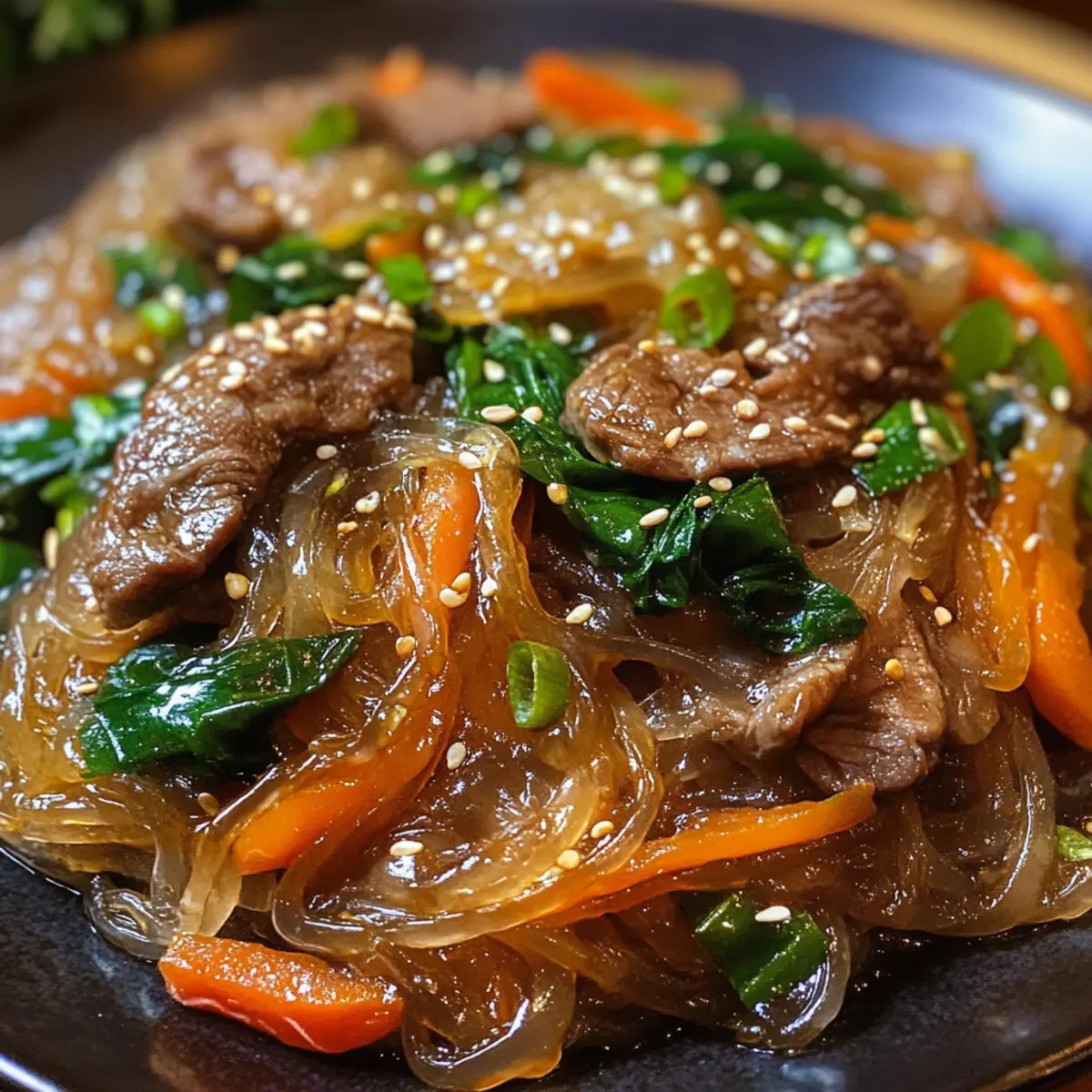
As I stood in my kitchen, the aroma of sizzling garlic and fresh vegetables filled the air, transporting me straight to the bustling streets of Korea. Enter Japchae, a delightful dish of stir-fried sweet potato noodles that beautifully balances chewiness and sweetness in every bite. This classic Korean recipe brings together tender vegetables and your choice of protein, allowing for endless customization—perfect for cozy dinners or lively gatherings with friends. Not only is it a nourishing meal brimming with vibrant colors, but it also stands out as a quick-to-make comfort food that’s sure to impress. Whether you’re in the mood for succulent beef, plant-based tofu, or a spicy kick with gochujang, you can tailor Japchae to fit your tastes perfectly. So, what variations will you create to make this dish your own?
Why is Japchae so special?
Uniquely Chewy Texture: Sweet potato glass noodles offer a delightful chew that’s hard to resist.
Flavor Fusion: The combination of savory beef, fresh veggies, and rich sesame oil delivers an explosion of taste in every mouthful.
Endlessly Customizable: Whether you prefer chicken, tofu, or a spicy kick with gochujang, this dish can adapt to any palate.
Quick to Prepare: This stir-fry comes together in about 30 minutes, making it a perfect weeknight meal to whip up after a busy day.
Crowd-Pleasing Appeal: Serve it warm at dinners or parties, and watch as everyone asks for seconds—it’s that good!
Cultural Connection: With origins in Korean cuisine, preparing Japchae not only satisfies your appetite but also allows you to explore a rich culinary tradition.
Japchae Ingredients
For the Noodles
• Sweet Potato Glass Noodles (Dangmyeon) – Provides a unique chewy texture and subtly sweet flavor; substitute with rice noodles if desired.
For the Protein
• Beef – Adds heartiness; use thinly sliced beef for quick cooking.
• Tofu – A great vegetarian alternative that absorbs flavors well.
• Chicken (optional) – A lean protein option that complements the dish beautifully.
For the Vegetables
• Carrots – Adds natural sweetness and vibrant color; can swap for bell peppers for a different taste.
• Spinach – Contributes nutritional value and bright color; kale can be used instead.
• Onions – Enhances the depth of flavor; green onions offer a milder taste.
For the Sauce
• Soy Sauce – Adds a savory umami flavor; tamari can be used for a gluten-free version.
• Sesame Oil – Imparts a rich, nutty flavor that elevates the dish; can be omitted but enhances aroma.
• Garlic – Offers a fragrant aroma; fresh garlic is recommended for the best flavor.
For the Optional Spice
• Gochujang – Introduces a spicy kick; adjust or omit to suit your heat preference.
Step‑by‑Step Instructions for Japchae
Step 1: Soak Noodles
Begin by soaking about 8 ounces of sweet potato glass noodles in warm water for approximately 30 minutes until they are completely softened and pliable. You can check the texture occasionally; they should feel chewy but not mushy. Drain the noodles and set them aside while you prep the other ingredients.
Step 2: Prepare Ingredients
While your noodles are soaking, thinly slice 1 cup of beef, 1 medium onion, and 1 large carrot into long strips. Rinse and chop 2 cups of fresh spinach. Having all your ingredients prepped will streamline the cooking process, ensuring that you can quickly add them to the pan as needed for your Japchae.
Step 3: Stir-Fry Beef
Heat 2 tablespoons of oil in a large skillet or wok over medium-high heat. Once the oil is shimmering, add the sliced beef to the pan, stirring frequently for about 3-4 minutes, or until the beef is browned and cooked through. When finished, remove the beef from the pan and set it aside on a plate to keep warm.
Step 4: Cook Vegetables
In the same pan, add a bit more oil if needed and toss in 2 minced garlic cloves and the sliced onion. Stir-fry for about 2 minutes until the onions are translucent, then add the carrot strips. Cook for another 2-3 minutes until the carrots are slightly tender but still crisp. Finally, toss in the spinach and stir-fry for an additional minute until just wilted.
Step 5: Combine Ingredients
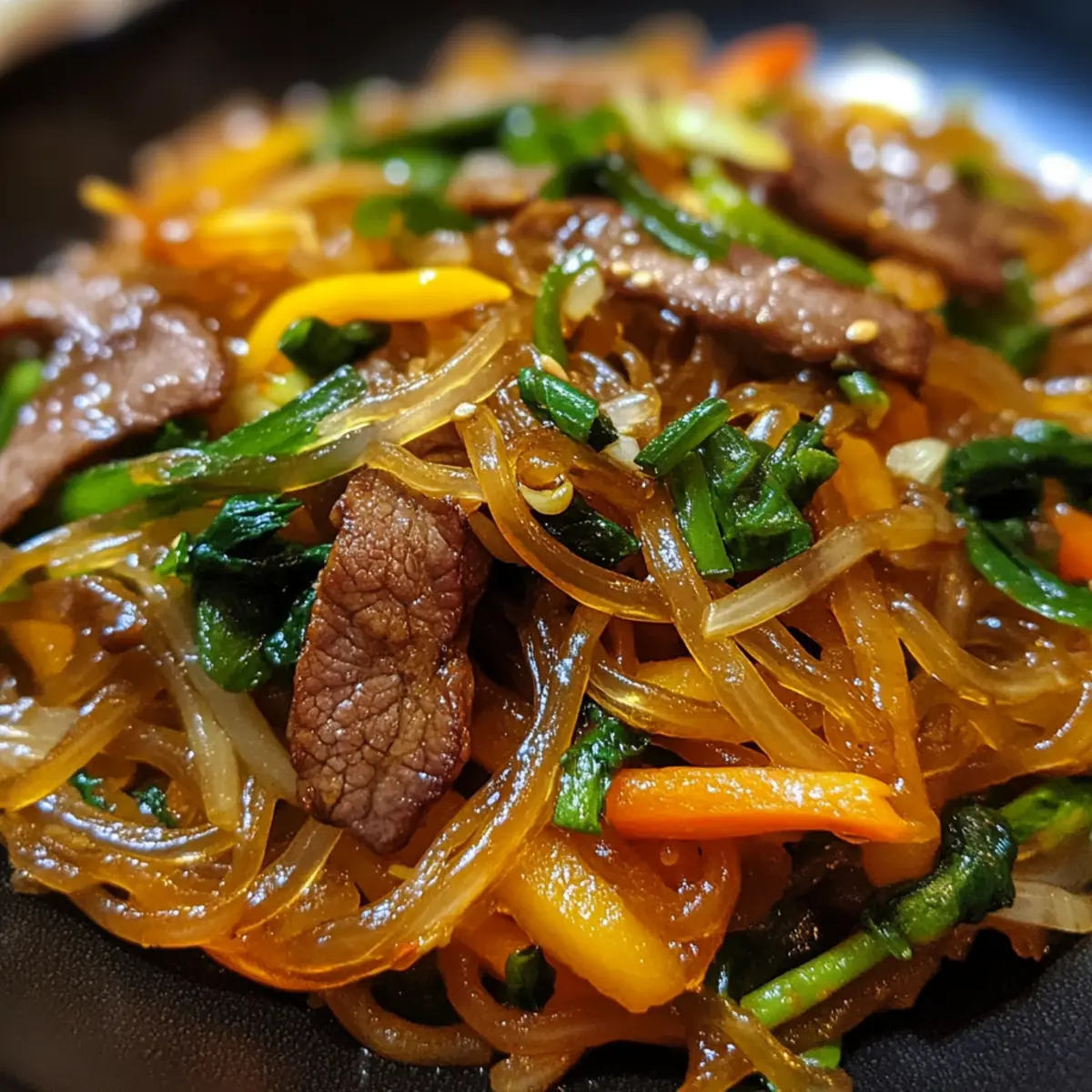
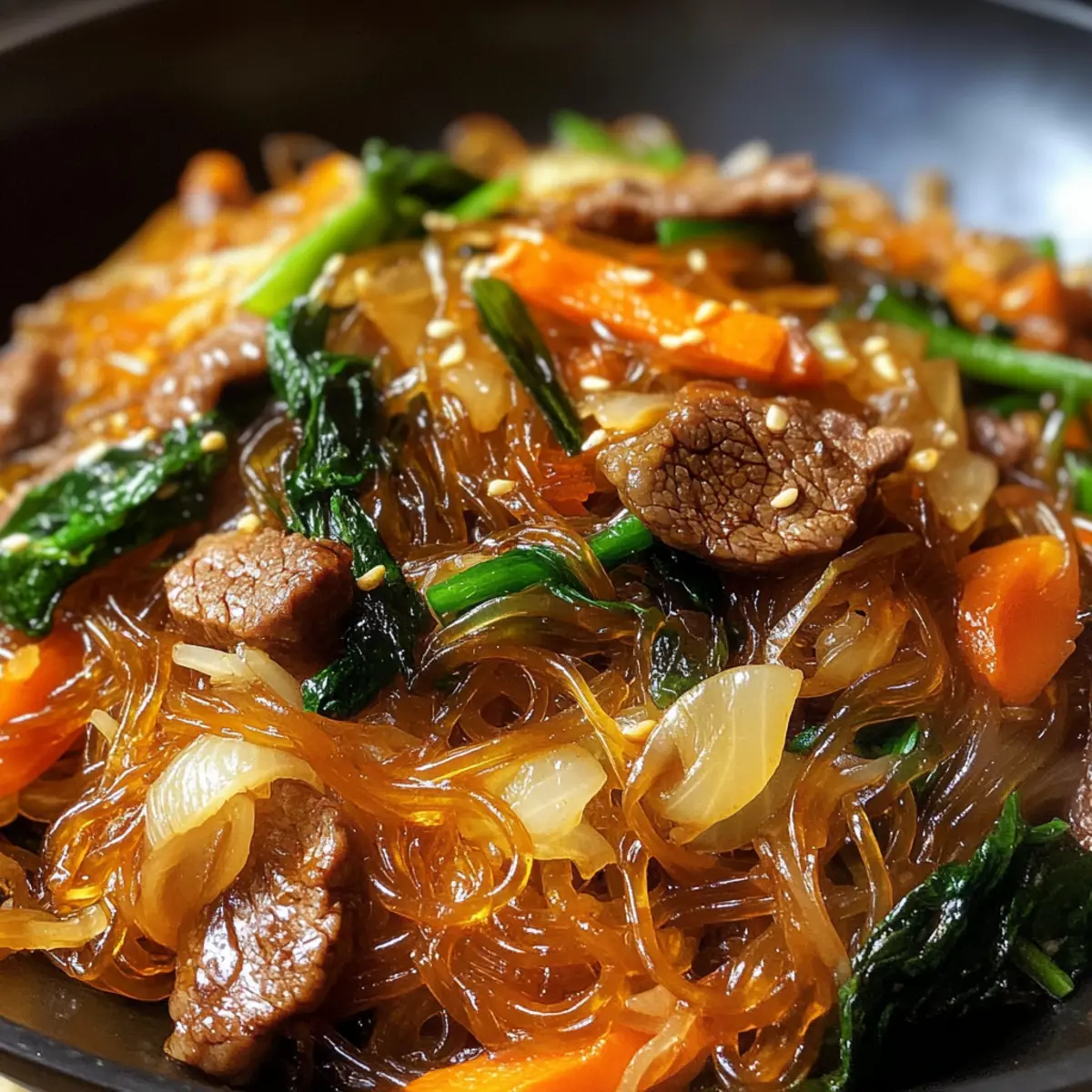
Add the drained noodles to the pan with the cooked vegetables, then return the beef to the mixture. Pour in 3 tablespoons of soy sauce and 1 tablespoon of sesame oil. Toss everything together over medium heat for about 2-3 minutes, ensuring that the noodles are well distributed and coated in sauce. The Japchae should be glossy and well-combined.
Step 6: Serve
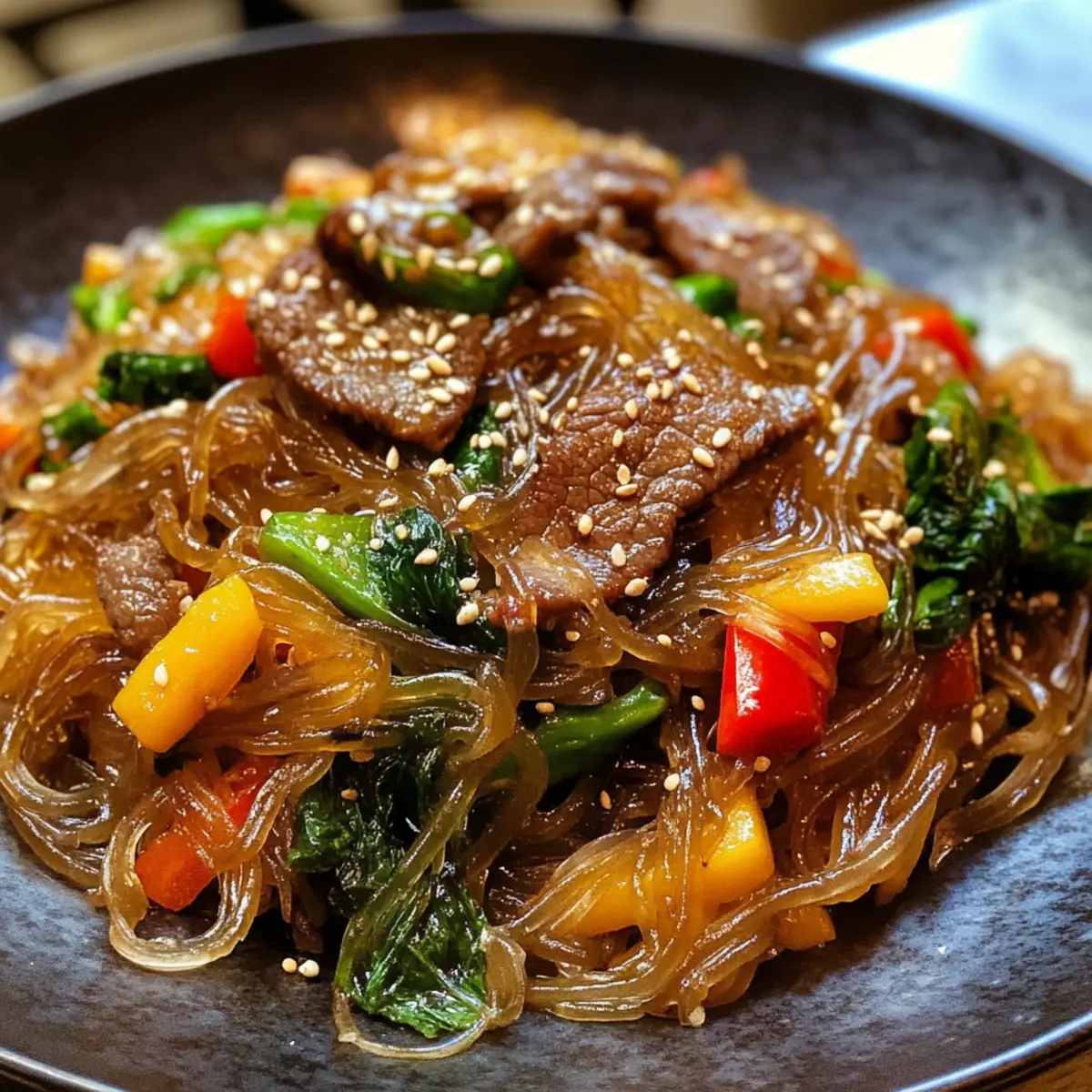
Once everything is heated through and well-mixed, remove the pan from heat. Garnish with chopped green onions for a fresh finish. Serve your delicious Japchae warm, either as a main dish or accompanied by rice and kimchi for a complete meal experience. Enjoy this vibrant Korean classic!
Storage Tips for Japchae
Fridge: Store leftover Japchae in an airtight container in the refrigerator for up to 3 days to maintain freshness and flavor.
Freezer: For longer storage, freeze Japchae in a freezer-safe container for up to 2 months. Thaw in the refrigerator overnight before reheating.
Reheating: To restore the noodles’ chewy texture, reheat on the stove with a splash of water, stirring gently over medium heat until warmed through.
Airtight Reminder: Always ensure your container is tightly sealed to prevent moisture loss or absorption of other odors from the fridge.
Japchae Variations to Explore
Feel free to make this dish your own with these flavorful twists and substitutions!
-
Plant-Based: Swap beef for tofu or edamame for a protein-packed vegetarian option. The chewy texture of tofu pairs wonderfully with the other ingredients.
-
Chicken Surprise: Use thinly sliced chicken breast instead of beef for a lighter take on Japchae. Season it well, and enjoy the juicy, tender bites in every forkful.
-
Spicy Kick: Add a dash of gochujang or sprinkle in some red pepper flakes for extra heat. Adjust the spice level to your liking and enjoy the flavorful depth it adds!
-
Vegetable Medley: Toss in additional veggies like bell peppers, mushrooms, or zucchini for extra color and nutrition. Each veggie adds its own unique taste, transforming the dish!
-
Gluten-Free Option: Use tamari instead of soy sauce to keep it gluten-free. It provides the same delicious umami flavor without compromising dietary needs.
-
Noodle Swap: If you can’t find sweet potato noodles, try using rice noodles for a different texture. They’re equally delicious and still keep the essence of a great stir-fry.
-
Herb Boost: Garnish with fresh herbs like cilantro or basil for a zesty, aromatic finish. This twist can elevate your dish with a burst of freshness!
-
Nutty Flavor: Sprinkle roasted sesame seeds on top before serving. This adds a delightful crunch and an extra layer of nutty flavor that complements the dish beautifully.
Feeling inspired? With a little creativity and personal touch, your Japchae can transform into a masterpiece that reflects your unique taste. Dive into these variations and enjoy a culinary adventure!
Make Ahead Options
Preparing Japchae in advance is a fantastic way to save time during your busy week! You can soak the sweet potato glass noodles up to 24 hours ahead—just drain and refrigerate them until you’re ready to cook. Additionally, you can slice your beef and vegetables (carrots, spinach, and onions) a day in advance. Store them separately in airtight containers to maintain their freshness. When you’re ready to finish the dish, simply stir-fry the beef and vegetables until cooked, add the pre-soaked noodles, and toss everything with soy sauce and sesame oil. This way, you’ll have a delicious Japchae on your table with minimal effort and just as vibrant flavors!
What to Serve with Classic Japchae?
When serving up this vibrant dish, consider these delightful pairings to create a memorable meal experience.
-
Kimchi: This spicy fermented dish adds tang and crunch, perfectly balancing the sweetness of Japchae. It’s an essential companion to any Korean meal.
-
Steamed Rice: A perfect base to soak up the rich flavors of the stir-fried noodles. The simplicity of rice highlights the complex taste of each ingredient.
-
Korean Fried Chicken: Crispy, juicy, and seasoned to perfection, this dish brings a savory kick to your table and complements the chewy noodles beautifully.
-
Sesame Spinach Salad: Fresh and crisp with a nutty dressing, this salad provides a delightful contrast to the softness of Japchae and adds a burst of color.
-
Fruit Punch or Soju: A refreshing fruit punch or a glass of chilled soju will elevate your dining experience, offering a sweet or smooth finish to your meal.
-
Miso Soup: Light and savory, this broth can warm your palate before diving into the richness of Japchae, making it a cozy addition to the meal.
-
Pineapple Chunks: Offering a sweet contrast, fresh pineapple adds a tropical touch that harmonizes beautifully with the flavors of Japchae.
Expert Tips for Perfect Japchae
• Soak Noodles Properly: Ensure that your sweet potato glass noodles are soaked long enough to achieve that delightful chewiness. Avoid under-soaking, which can lead to clumping.
• Avoid Overcooking Vegetables: To keep their vibrant colors and crunch, stir-fry vegetables just until tender. Remember, they should maintain some bite for the perfect Japchae texture.
• Use a Large Pan: Use a spacious wok or skillet to allow for easy stirring and even cooking. This will help everything combine beautifully without overcrowding the pan.
• Adjust Seasoning Gradually: As you cook, taste and gradually adjust the soy sauce and sesame oil to enhance the flavors. It’s easier to add than to fix an overly salty Japchae!
• Customizable Delight: Don’t hesitate to experiment! Swap proteins or add additional vegetables to truly make this Japchae your own, ensuring it fits your family’s taste preferences.
Advertisement
Japchae Recipe FAQs
What type of sweet potato glass noodles should I use?
I recommend using Dangmyeon, the traditional sweet potato glass noodles, for the best texture and flavor. They provide that delightful chewiness that makes Japchae so special. If you need a gluten-free option, look for certified gluten-free versions of these noodles or substitute with rice noodles.
How should I store leftovers?
Store any leftover Japchae in an airtight container in the refrigerator for up to 3 days. To keep it fresh, make sure the container is sealed tightly. This will help maintain the flavors and prevent it from absorbing any odors from the fridge.
Can I freeze Japchae?
Absolutely! You can freeze Japchae in a freezer-safe container for up to 2 months. When you’re ready to enjoy it again, thaw it overnight in the refrigerator. To reheat, gently warm it on the stove with a splash of water to restore the noodles’ chewy texture and prevent them from drying out.
What should I do if my noodles become clumpy?
If your noodles clump together, it’s often because they weren’t soaked properly or cooked at the right temperature. To fix this, heat a little oil in a pan, add the clumped noodles, and toss them gently. If needed, add a splash of water or soy sauce to help loosen them up. Stir-fry until they separate and have a nice sheen.
Can I customize the ingredients for dietary needs?
Very! Japchae is wonderfully versatile. You can use chicken or tofu for protein, and if you’re addressing allergies or specific dietary needs, opt for tamari instead of soy sauce for a gluten-free option. You can also adjust the spice level by using gochujang or omitting it completely to accommodate preferences.
How long should I soak the noodles for the perfect texture?
Soak the sweet potato glass noodles in warm water for about 30 minutes, or until they are completely softened and pliable. Check them periodically; they should feel chewy but not mushy. After soaking, drain and set them aside while you prepare the other ingredients.
Delicious Japchae: Chewy Sweet Potato Noodles You’ll Love
Ingredients
Equipment
Method
- Soak the sweet potato glass noodles in warm water for approximately 30 minutes until softened and pliable.
- Thinly slice the beef, onion, and carrot into long strips. Rinse and chop fresh spinach.
- Heat oil in a large skillet over medium-high heat. Stir-fry sliced beef until browned, about 3-4 minutes. Remove beef and set aside.
- In the same pan, stir-fry garlic and onion until translucent. Add the carrots and continue cooking for 2-3 minutes. Finally, add the spinach and stir-fry until wilted.
- Add the drained noodles and cooked beef back to the pan. Pour in soy sauce and sesame oil, and toss everything together over medium heat until well combined.
- Garnish with chopped green onions and serve warm with rice and kimchi.